
Buying guide · Grinders
How to choose a grinder
Two, three or four piece. Teeth or milling. Aluminum or stainless. Most of it comes down to two questions: how much you put through it, and how much you care about what it does to the flower. Everything below is a grinder we actually keep at 1321 in Venice.
How to choose a grinder: the short answer
Buy a four piece in the size that matches one session for you, in anodized aluminum or stainless, and spend the money on build quality rather than on teeth count. A four piece adds a screen and a kief catch under the grinding chamber, which is the only feature most people end up actually using. If you go through more than a couple of grams at a time, size up before you upgrade anything else.
- Occasional smoker: a small four piece is plenty, and it fits a pocket.
- Daily, one or two people: a medium four piece is the size most people should own.
- Rolling for a group: go large, or step up to a mill that does several grams in one pass.
- You hate cleaning: a toothless mill has nothing for resin to pack into.
Teeth or milling: two mechanisms
Almost every grinder on a shelf has teeth. A mill has none. This is the one decision that changes the output rather than just the capacity, so it is worth understanding before you compare anything else.
A toothed grinder
- Two plates of teeth pass each other and tear the flower
- Fast, familiar, and works with one hand
- A four piece screens kief into a catch below
- Resin collects around the teeth over time
- Consistency depends on how long you keep turning
A mill
- A fluted rotor rolls flower across a plate, no teeth
- Output is light and even rather than clumped
- Trichomes stay on the flower instead of the tool
- Stems stay up top, out of what you collect
- Open design, so there is nothing to clog
Neither one is wrong. A well built toothed grinder is quick and predictable, and a Santa Cruz Shredder is the version of that we stand behind. Milling trades a little speed for a more even result and far less maintenance, which is the case we make on why the Flower Mill is different. If you want them set against each other directly, read Flower Mill vs Santa Cruz Shredder.
Two, three or four piece
Piece count is just how many chambers the thing comes apart into. It tells you whether you get a kief catch, not how well it grinds.
Lid and bowl
Grind and take it straight out of the same chamber. Slim, cheap, nothing to lose. You also lose the kief and you have to tip it out by hand every time.
Adds a collection chamber
Ground flower falls through into its own chamber, so you open the bottom and pour. No screen, so kief stays mixed in, which some people prefer because nothing is held back.
Adds screen and kief catch
A mesh screen sits under the collection chamber and lets trichomes fall into a catch below. It is the standard for a reason, and it is the layout we recommend to most people.
One more option sits outside the count entirely. On a mill there are no teeth and no screen: material is milled across a plate and falls into the chamber below, and the stems stay behind on their own. If you want the kief separated, buy a four piece. If you want the flower handled more gently, buy a mill.
What size you need
Size is the decision people get wrong most often, in both directions. Match it to one session rather than to a week. Prices below are live, and anything sold out says so.
| Size | Roughly | Best for | At 1321 |
|---|---|---|---|
| Small | A pocket grinder, one or two joints | Carrying, solo sessions | SCS Small 4 piece, sold out online |
| Medium | About 2 inches across, a full session | Most people, daily use | SCS Medium 4 piece, sold out online |
| Large | Several grams at once | Two or more people, rolling ahead | SCS Large 4 piece $88 |
| Jumbo | A table grinder, not a pocket one | Prepping in bulk | SCS Jumbo, ask in store |
| Mill 2.0" | About 1.5g a pass | A mill that still pockets | Flower Mill Standard 2.0" $28 |
| Mill 2.5" | About 2.5g a pass | The everyday mill | Flower Mill Standard 2.5" $38 |
| Mill 3.5" | Up to 7g a pass, 1,000g an hour | Volume, and anyone tired of doing it twice | Flower Mill 3.5" Pro $249 |
The mistake in one direction is buying a pocket grinder and then grinding three times for one session. The mistake in the other is buying a jumbo that lives in a drawer because it does not travel. If you are between two sizes, the bigger one is usually the one you keep, as long as you are honest about carrying it.
Material and build
This is where price differences are real rather than cosmetic. Two grinders can look identical and be made of very different metal.
Anodized aluminum
The standard for good grinders. Light, strong, and the anodizing keeps the surface from shedding into what you grind. Santa Cruz Shredder and the Flower Mill Standards are both aircraft grade aluminum, and this is the material most people should buy.
Stainless steel
Heavier, harder, and easier to get properly clean, which matters if you wash a grinder rather than wipe it. The Flower Mill Premium uses a food safe stainless plate and housing, and it is the reason that model costs more than the aluminum Standard.
Zinc alloy and plastic
What you get in a gas station grinder. The teeth round off, the threads gall, and painted finishes flake into the flower. Plastic is fine as a one trip travel item and nothing more. We do not stock either.
Two details are worth more than the spec sheet. Threads that turn smoothly when the grinder is half full, and a magnetic or well machined lid that stays shut in a bag. Both are things you can check by hand in about five seconds, which is the argument for buying one in person.
What we would actually buy
Four picks from what is on the shelf, by the job rather than by the price tag.
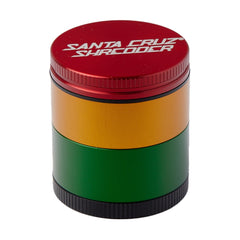
SCS Medium 4 piece
Anodized aluminum, 27 teeth, kief catch, six colors. The size most people should own.
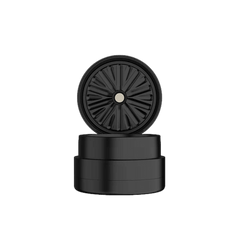
Flower Mill Standard 2.5"
Milling instead of teeth at the price of a mid range grinder. Fixed medium plate.
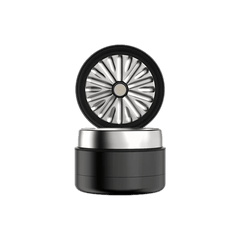
Flower Mill Premium
Stainless, removable pollen screen, and swappable plates from $14.
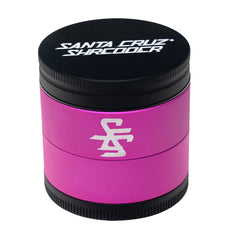
SCS Split Tone Medium
The medium four piece in two tone anodizing, four colorways. Same grinder, better looking.
Going bigger than any of these means the 3.5" Pro Mill at $249, which does up to seven grams in a pass, or the Pro Kit at $459 with all six plates and a case. Both are more grinder than most homes need, and worth it if you are prepping for a group.
Five things people get wrong
More teeth means a better grind.
Not on its own. Tooth count only matters alongside shape, spacing and how true the two halves run. A well machined grinder with fewer teeth beats a cheap one with more, every time. Buy the build.
Finer is better.
No. Too fine packs down and chokes airflow, which is why a joint that looked perfect runs hot and harsh. Even beats fine. If you want control over consistency, that is an argument for swappable plates rather than for grinding longer.
A kief catch is a gimmick.
It pays for itself. A four piece collects what a two piece leaves on the teeth, and after a few weeks there is enough in the catch to top a bowl. It is the single feature most worth the extra chamber.
Grinders do not need cleaning.
They do, and it is why most of them die. Resin packs into the teeth until the threads bind. Fifteen minutes with isopropyl every month or two fixes it. Our guide on cleaning a Santa Cruz Shredder without ruining the finish covers the method, and on a mill a wipe of the plate plus Mill Wax at $6 is the whole routine.
They are all the same, so buy the cheap one.
They are not. The difference shows up at month six, in threads that still turn and teeth that still bite. A good grinder is a one time purchase, and a cheap one is a subscription.
Turn one before you buy
Every grinder in this guide is on the shelf at 1321 in Venice. Come in, turn them half full, feel the threads and the lid, and take home the one that feels right. Free local pickup on online orders, and we are open until midnight every day.
Shop all grinders → Visit the shopCommon questions
What size grinder should I get?
Match it to one session rather than a week. A small four piece handles a joint or two and fits a pocket, a medium around two inches is right for daily use, and a large or a 3.5 inch mill makes sense once you are grinding several grams at a time. Between two sizes, take the bigger one if you will still carry it.
Is a four piece grinder worth it over a two piece?
Yes, for most people. The extra chambers give you a screen and a kief catch, so the trichomes that would otherwise stay stuck on the teeth end up collected. You also pour instead of scooping. A two piece is a good backup and a good travel piece.
What is the difference between a grinder and a mill?
A grinder has teeth that tear the flower apart. A mill has a fluted rotor that rolls it across a plate so it crumbles, with no teeth at all. Milling gives a lighter, more even result, keeps trichomes on the flower, leaves stems behind, and has nothing for resin to clog.
Aluminum or stainless steel?
Anodized aluminum is lighter and is what most quality grinders use, including Santa Cruz Shredder and the Flower Mill Standards. Stainless is heavier and harder, holds up to being washed rather than wiped, and is what the Flower Mill Premium uses. Avoid unanodized zinc alloy and painted finishes at any price.
How many teeth should a grinder have?
It matters less than how well the grinder is machined. Tooth shape, spacing and how true the halves run together decide the grind, and a precise grinder with fewer teeth outperforms a rough one with more. Treat tooth count as a spec, not a ranking.
How often should I clean a grinder?
Every month or two with daily use, or whenever it starts to feel stiff. Take it apart, soak the metal pieces in isopropyl, brush the teeth and threads, rinse and dry completely. A mill needs less: wipe the plate and re-wax it.
Which grinder do you recommend?
A Santa Cruz Shredder Medium four piece for most people, a Flower Mill Standard 2.5 inch if you want milling instead of teeth at a similar price, and the Flower Mill 3.5 inch Pro if you grind in volume. All three are in this guide with live prices.
Where can I buy a grinder near me in Los Angeles?
At 1321, 1321 Venice Blvd in Venice, CA, open daily until midnight. We carry Santa Cruz Shredder and the full Flower Mill range, including sizes that are hard to find locally, and you can handle them before deciding. Call 310-759-5232 to check what is on the shelf.
Keep reading
1321 only sells products permissible by the City of Los Angeles and the State of California.